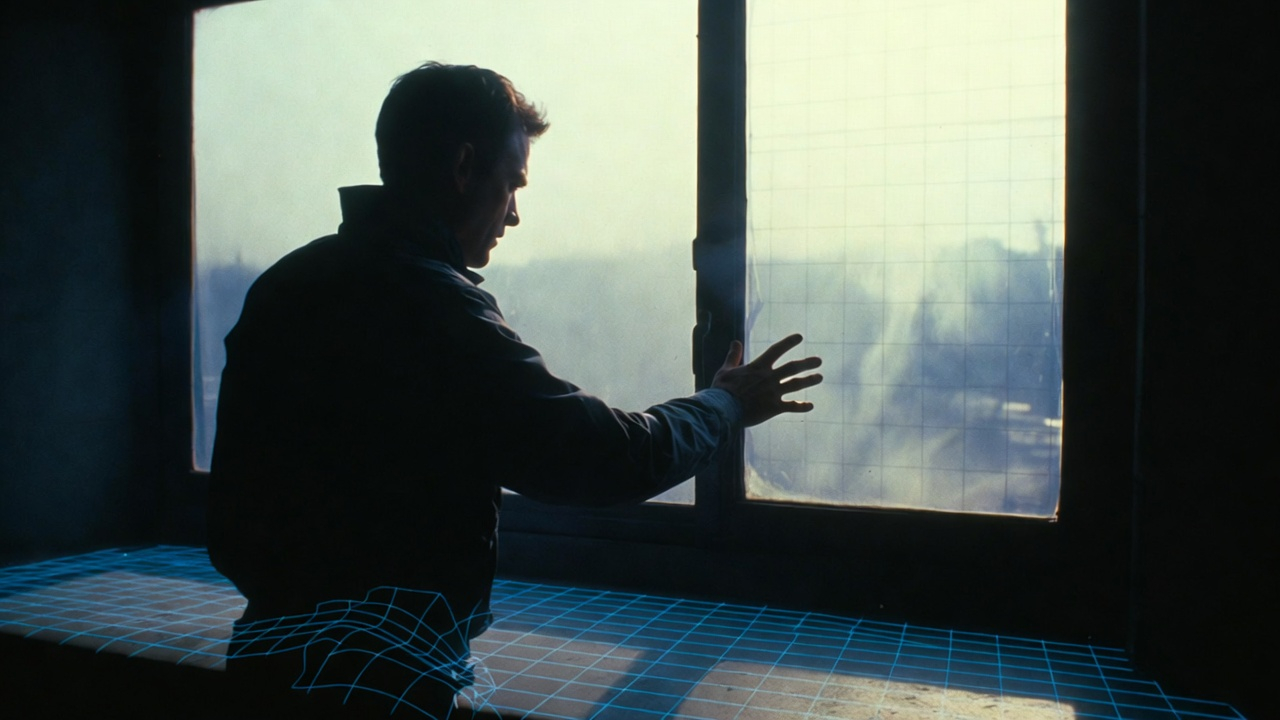
I spent my days performing the ultimate task: “Just breathe and reach the night.” I waited in the mud for the storm to pass. Eventually, rare mornings arrived when I felt, “Today, my body feels a little lighter.”
But let me speak as a former site manager: this “day when things feel a little better” is exactly the most dangerous timing, where secondary disasters (relapses) are most likely to occur.
The Trap of “Feeling Cured” Under Sunny Skies
When a thin ray of light finally pierces through a long-heavy head, humans tend to have the illusion that they are “cured” or “can function normally again.” Driven by the impatience to make up for delays in the construction schedule, you try to head outside in full gear.
“Maybe I’ll go to a cafe.” “Maybe I’ll open those piled-up emails just a bit.”
But the ground hasn’t fully solidified yet. The moment you open the front door and are hit by the bustle of the world and the violently bright sunlight, panic strikes. The gazes of others pierce through you, your brain’s processing power fails to keep up with the torrent of information, and your legs freeze. As a result, you flee back to your room, dive under the covers, and fall into a deeper hole of despair than before, thinking, “I really am a failure.” This is the terrifying “Secondary Disaster” (The Relapse).
Don’t Build Immediately; Start with “Test Boring”
No one is foolish enough to suddenly build a skyscraper on vacant land that has been abandoned for a long time. First, you need “Test Boring” (trial digging) to check the strength of the ground.
Mental rehabilitation is the same. You must not suddenly step onto the intense “site” of society. I used AI as a probe for this test boring.
“I feel like I can move a little today. But I’m afraid to go outside. Suggest three ‘micro-tasks’ that take less than 3 minutes, involve zero human interaction, and won’t hurt me even if I fail.”
AI, being emotionless, gives extremely physical and safe instructions:
- Open the window just 10 centimeters and take one breath of outside air.
- Take cold water out of the fridge and drink one full glass.
- Pick up just one piece of trash from your desk and put it in the bin.
Small Steps with a Safety Harness
This is my test boring. If I open the window and feel, “Actually, the outside noise is scary,” I can just close it immediately. With just that, a major accident is prevented. Even if I “fail” at the task of opening a window, it doesn’t leave a scar on my resume.
The micro-tasks provided by AI are only performed while the safety harness (exit strategy) is securely connected. A tiny, tiny sensation of “I can do this much.” It is only by layering those thin sheets of cement over and over again that you can create a foundation strong enough to support the heavy machinery of society.
The Xer’s Monologue
Don’t start a rush job just because the weather was good for one day. I know the feeling of impatience all too well. It feels like everyone else is moving forward while you’re left behind.
But ground that has experienced a massive collapse is more fragile than you think. First, let the AI give you a “can’t-fail task.” Open the window. Drink some water. That alone is a sufficient day’s work.
“The one who solidifies the ground safely—even if it’s just one millimeter a day—is the one who will eventually make the great comeback. As long as you stay alive, you can always rebuild the site.”
Got it done.
Comments