April 1st has become one of the most visually creative days on Japanese social media. Although it’s not a traditional Japanese holiday, companies, game studios, anime producers, and brands treat it like a yearly festival of elaborate hoaxes.
In Japan, April Fools’ is less about personal pranks between friends and more about high-production corporate jokes. Brands release fake product announcements, impossible services, or ridiculous collaborations — often with polished videos, mock websites, and detailed visuals that look completely real. Some of the best ones even turn into actual limited-edition products later (the famous “fake-to-real” pattern).
What makes Japanese April Fools’ stand out:
- Extremely high creative quality — fake ads and websites can fool even locals at first glance.
- Heavy focus on food, games, and everyday items (e.g., weird-flavored snacks, impossible gadgets, or bizarre convenience store services).
- A mix of playful absurdity and clever wordplay.
However, there’s a darker side that appears almost every year: the joke that crosses the line and sparks backlash. When a prank touches real social issues — like rising rice prices, food shortages, or sensitive daily concerns — it can quickly turn into anger and forced apologies. In the age of fast-scrolling social media, even a clear #AprilFool tag sometimes fails to protect the brand from criticism.
Japanese Official Funny Posts: Creative Corporate Pranks That Often Go Viral
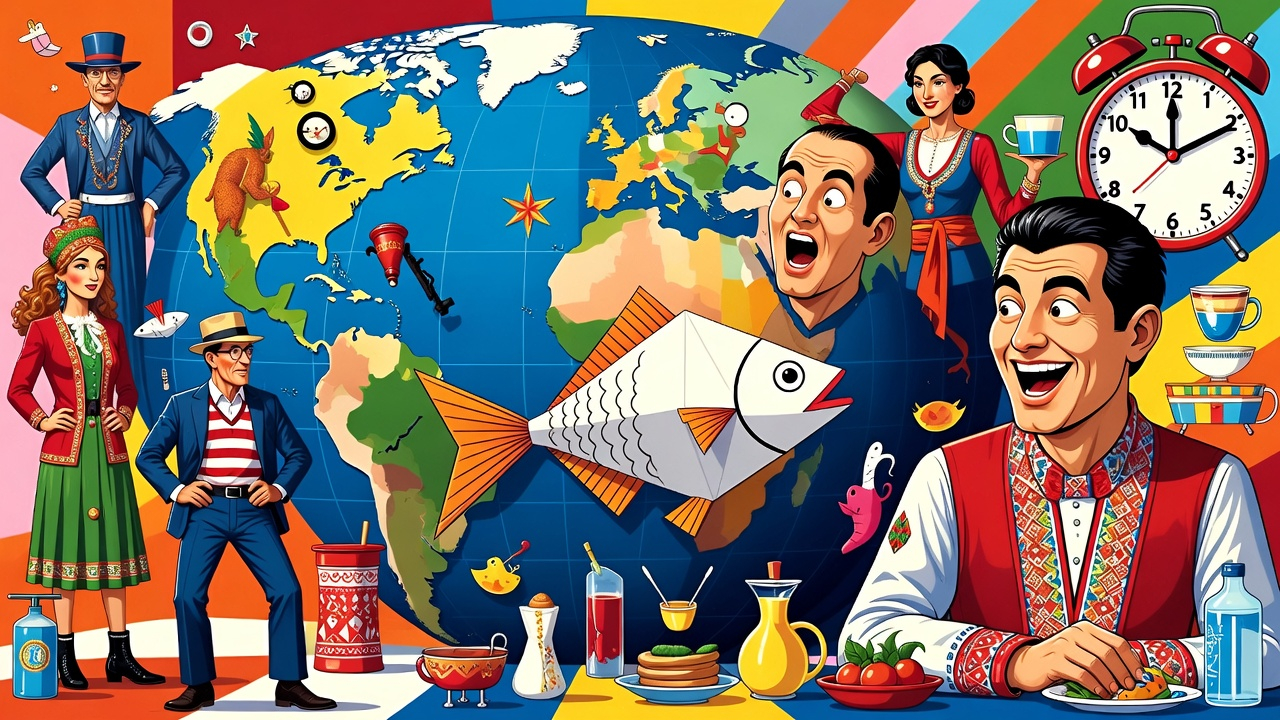
How April Fools’ Day Differs Around the World
The way people “play the fool” changes dramatically depending on the culture:
- Japan: Corporate-driven, visually stunning, marketing-oriented. Emphasis on creativity and shareability. Personal pranks are relatively mild; the spotlight is on brands and media.
- United States & Canada: Big, loud, and often media-heavy. Companies and news outlets create elaborate fake stories. Practical jokes on friends and coworkers are common, but there’s growing sensitivity around misinformation.
- United Kingdom & Ireland: Strict rule — jokes must end by noon (12:00 PM). If you prank someone after midday, you become the fool. Classic “fool’s errand” (sending someone on a pointless task) is traditional.
- France, Italy, Belgium: Called “Poisson d’Avril” (April Fish). Children (and sometimes adults) sneak paper fish onto people’s backs. It’s light, symbolic, and rarely mean-spirited.
- Scotland: A two-day event. April 1 is “Hunt the Gowk” (sending people on silly errands), and April 2 is “Tailie Day” (jokes involving tails or bottoms).
- Spain & Latin America: Not on April 1, but on December 28 (Día de los Inocentes / Day of the Holy Innocents). Sometimes involves larger public pranks or even throwing flour in some regions.
- Other countries: Some places have specific rhymes or phrases you must say after the prank is revealed, or they focus more on media hoaxes than personal tricks.
In short, what counts as “funny” or “acceptable” varies wildly. A joke that gets laughs in one country can feel insensitive or confusing in another.
From my rock bottom perspective, April Fools’ Day is a strange mirror of society: we love being tricked, but only within invisible boundaries. Cross them, and the laughter disappears fast. In Japan, the line between “brilliant creativity” and “bad taste” seems to get thinner every year.
Comments